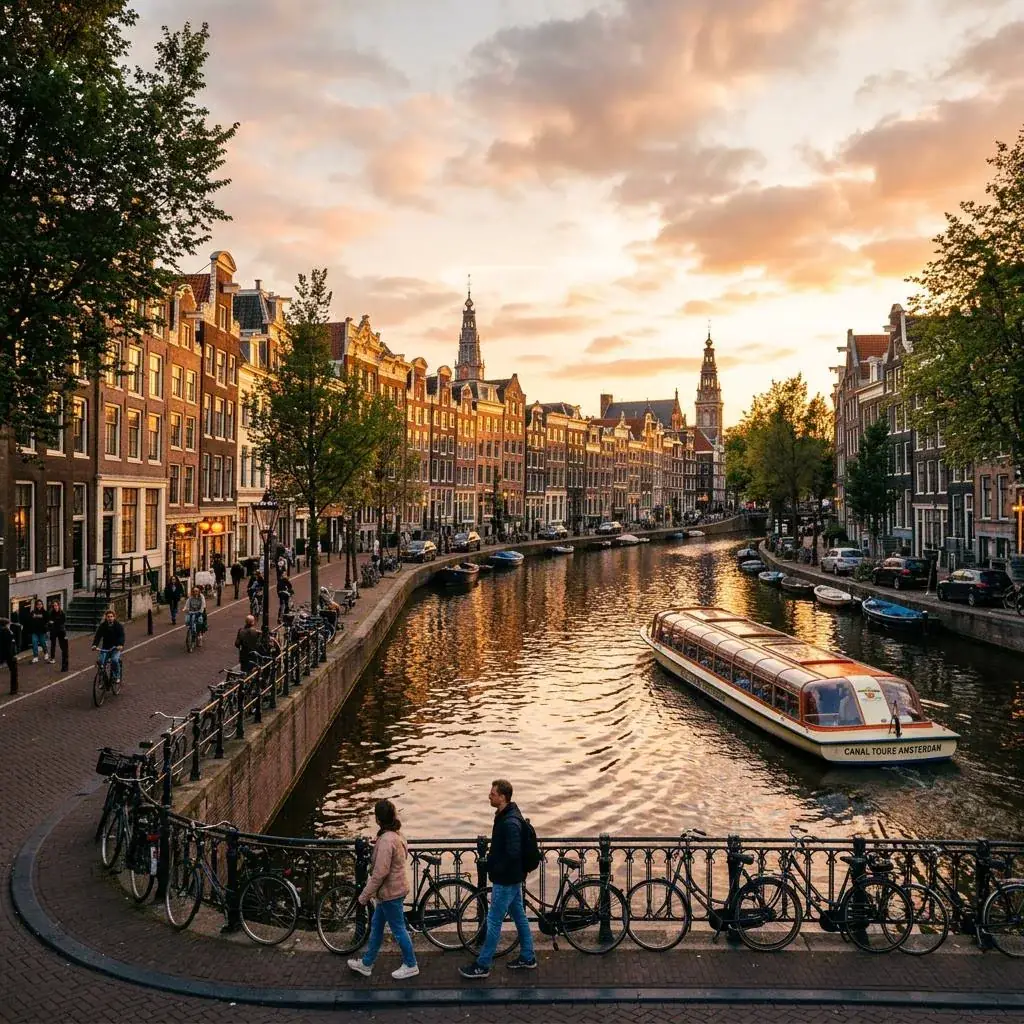

⚡ Quick Verdict & Recommendation
Quick answer:
- Speed limit: 7.5 km/h on all inner-city canals — strictly enforced
- Alcohol limit for the skipper: 0.2‰ BAC — stricter than the driving limit
- Most common fine: Speeding — fines start at €140
By Lisa van der Berg, Amsterdam local and canal cruise expert.
If you're hiring a boat or bringing your own to Amsterdam, knowing the municipality's canal regulations is worth 10 minutes of your time. The water police are actively present, and the fines are real.
Speed limit: 7.5 km/h
On all canals within the canal ring, the maximum speed is 7.5 km/h. For reference: that's slightly faster than a brisk walk and slower than a jog. Electric sloepen barely reach this limit; thermal engine boats can easily exceed it.
Enforcement: The water police use radar measurement from fixed and mobile checkpoints. Wash (the wake behind your boat) is also an indicator — excessive wash at low speeds suggests a violation.
Fines:
- 7.5–10 km/h: €140
- 10–12 km/h: €220
- Above 12 km/h: €320 + possible revocation of boating rights
Alcohol limit
The skipper (person at the helm) is subject to an alcohol limit of 0.2‰ BAC — stricter than the 0.5‰ limit for drivers. Passengers may drink freely.
Checks: On busy summer days and during festivals, breathalyser checks are carried out. On King's Day, this is almost certain.
Consequences: Fine from €280, plus possible disqualification from operating a vessel.
For King's Day-specific rules, see our King's Day boat guide.
Required safety equipment
For all boats (including hired sloepen), the following must be on board:
- Life jacket for every person on board
- Approved distress signal (whistle or flare for larger boats)
- Fire extinguisher (for boats with combustion engine)
- First aid kit (not legally required, but strongly recommended)
Hire operators provide this as standard. Check it at departure anyway.
What's actually prohibited
Prohibited on Amsterdam canals:
- Swimming or jumping from the boat (fine: €95)
- Throwing waste in the water (fine: €150 per offence)
- Music above 85 dB (measured at 25 metres)
- Travelling in designated one-way canals in the wrong direction
- Anchoring in through-routes
One-way canals
Several Amsterdam canals are one-way for boats. Hire operators provide a map. The most common confusion: the Herengracht has one-way sections that are not intuitively obvious to visitors.
For beginners who've just hired a boat, the simple rule: follow the other boats, note which direction they're travelling, and go with them.
Registering your own boat
If you're bringing a private vessel from outside the Netherlands, it must be registered and display a valid registration number. EU-registered boats are generally accepted under mutual recognition rules; non-EU boats may require temporary registration. Contact Rijkswaterstaat (the Dutch waterway authority) before arrival.
For more on hiring a boat vs. taking a commercial cruise, see our boat rental guide.
Fines: What Actually Happens
The fine system exists. Enforcement is inconsistent.
Speed (max 7.5 km/h in the historic canal ring): The most commonly enforced rule. The Grachtenboa's (city canal inspectors in small patrol boats) carry speed measurement equipment. First offence: €75–150.
Glass bottles on board a rental boat: €90 if inspected. Less often checked on quiet side canals.
Travelling the wrong way on one-way canals: €150 — the most common surprise for self-drive tourists.
The Most Common Mistakes
After years on the water, we see the same mistakes repeatedly:
- Accelerating too quickly after a bridge — immediately after a bridge the sightline is limited; the rule is to exit slowly
- Mooring on private pontoons — only at officially marked docks. Private pontoons are recognisable by chains or padlocks
- Loud music after 22:00 — Amsterdam has city-wide noise ordinances on the canals at night
The full navigation rules are available from your rental operator. Do not rely solely on the verbal briefing.
Affiliate disclosure: This article contains affiliate links. We may earn a small commission if you book through our links, at no extra cost to you. Our recommendations are editorially independent.